The Deep-Ocean Stewardship Initiative (DOSI) has released a new policy brief, with contributions from BlueRemediomics’ partner Abbe Brown of the University of Aberdeen, titled “Towards coherence and avoiding undermining: policy recommendations on implementation of the BBNJ Agreement regarding marine genetic resources.” It offers guidance to support the effective implementation of the BBNJ Agreement, particularly in relation to Instruments, Frameworks, and Bodies (IFBs) as well as Marine Genetic Resources (MGRs).
Adopted on 19 June 2023 and scheduled to enter into force in January 2026, the BBNJ Agreement aims to protect the deep sea through conservation measures like marine protected areas, while also promoting equitable access to the benefits derived from research on marine genetic resources (MGR) and digital sequence information (DSI) from areas beyond national jurisdiction (ABNJ).
This new brief provides 14 key recommendations, including on general governance and cooperation, harmonising work on benefit-sharing mechanisms, inclusive participation, monitoring and implementation activity and accountability, as well as practical next steps. It also provides a reminder of the priority actions for the Agreement to be implemented as efficiently as possible, in turn protecting the deep sea.
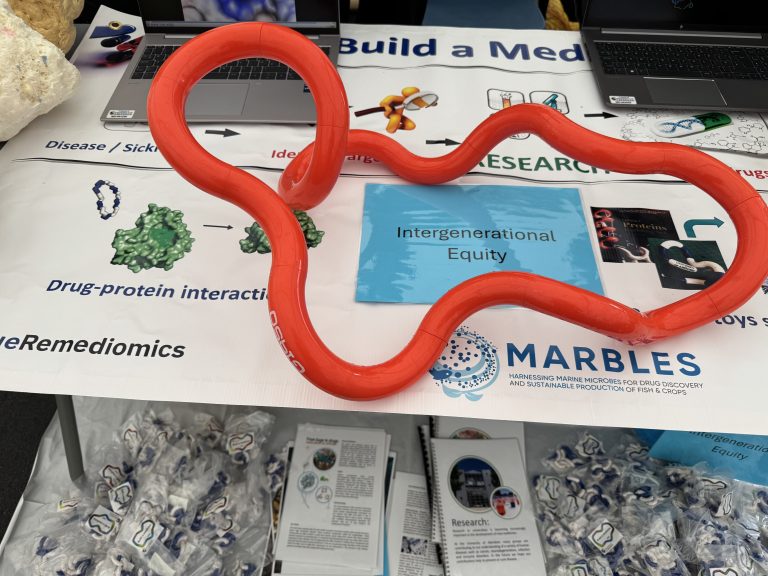
Making from the Ocean was a day long family-focused event providing a fun and interactive educational experience, with well over 100 participants throughout the day. Emmanuel Tope Oluwabusola, Abdu Al Nashrey and Abbe Brown worked with young people and their families to explore medicine creation, target identification, and function within the human body. The younger people constructed their own “medicine” and integrated it with a TangleProtein mode. This provided an accessible base to explore with older participants and their family group, drug-protein interactions as a critical element in drug efficacy and disease management, links between Ocean resources and medicines, and intergenerational equity – who should control and profit from “their medicine”.
Credits: Abbe Brown
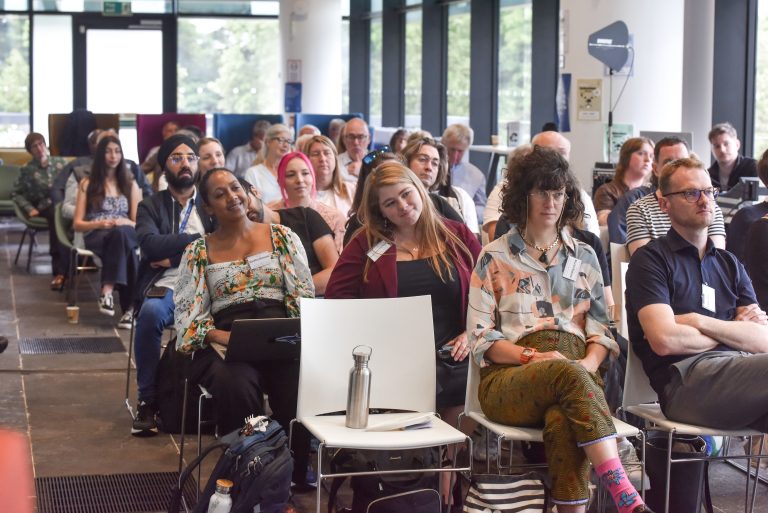
Tall Ships, Science & Society was an evening in person event attended by over 60 people. It began by considering art and film relevant to the ocean and Tall Ships (including challenger – Alice Strange and the Song of Ocean with translations into European coastal languages) and records of previous Tall Ships (from the National Oceanography Centre Discovery collection, and from the collections of the University of Aberdeen). An international panel from international diplomacy, law, science, and art (Júlia Schütz Veiga, Siva Thambisetty, Pablo Orozco, Tammy Horton and Alice Strange) shared their diverse thoughts and experiences on the negotiation and implementation of the BBNJ Treaty, what the ocean means to them and how they engage with it in their work, the importance of combining art and science, who should own the ocean and the products derived from it, and how we could all get involved to make a difference. This was followed by a highly engaged and open discussion with valuable contributions from the audience.
The interdisciplinary Aberdeen team and its partners look forward to continuing to inform practice and decision making as states and the new BBNJ institutional infrastructure moves to implementation and regarding the BBNJ’s intersections with other regimes.